
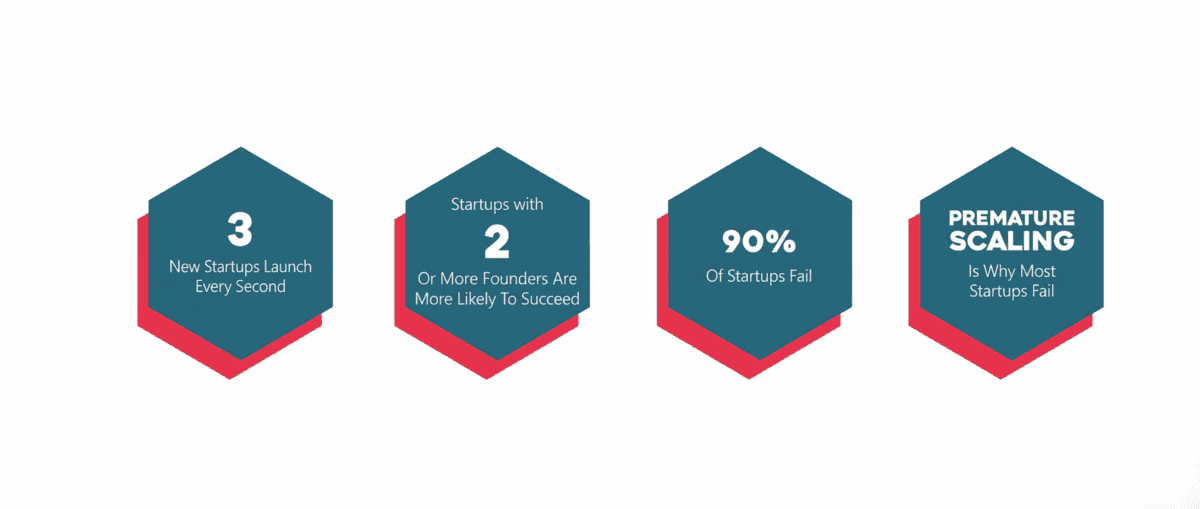
Getting your business idea out of the gates and building a business model upon it requires a lot of effort and resources. You always have to fight against the forces of failure and identify and take steps as and when required. But in order to succeed in building upon your dream idea, it’s important for you to follow the startup process. You should know when is the right time for what as for every 1000 startups, only two get funding from a venture capitalist and out of every 10 startups, 9 fail because they lack the basic market research before launching their product in the market.
The startup journey isn’t easy. The steps, however, if planned correctly can make this journey a lot easier and enjoyable. Here’s the startup process to help you succeed in your venture.
The Startup Process
Ideation
You need to ask yourself and your prospective customers varied questions in order to select and validate your idea.
- Idea Vs. Concept – Explaining The Difference
- How To Get A Startup Idea?
- Research, Evaluate and Validate Your Startup Idea
- How To Validate Your Business Idea: A Guide
- What Is Proof Of Concept (POC)?
- Target Marketing Explained
- How To Do Market Research?
- What Is Problem-Solution Fit? How To Achieve It?
- 20 Questions to Ask Yourself Before Starting Your Business
- The 10 Best Idea Generation & Validation Tools For Startups
- The 12 Best Market Research Tools For Startups
COFOUNDER
Startups with 2 or more co-founders are more likely to succeed.
Prototype
Prototyping is an essential yet most ignored practice of the startup process. Know your basics right and start with a prototype to avoid any failure in future.
MVP, BETA & EARLY ADOPTERS
Early adopters give you the most required initial feedback and indirectly tell you whether your product is a fit for the market or not.
- Understanding The Innovation Adoption Lifecycle
- Who Are Early Adopters & Why Do They Matter?
- What Is A Minimum Viable Product (MVP)?
- Validating Your Product Hypothesis Using An MVP
- What Is A Beta Version?
- MVP vs. Beta: What’s The Difference?
- The 12 Best MVP & Beta Tools For Startups
- The 10 Best App Builders
BUSINESS & REVENUE MODEL
Business model is the ultimate structure of how your idea will work and make money in the real market.
- What Is A Business Model? 24 Types Of Business Models
- Business Model Canvas Explained
- How to Develop an Ideal Business Model?
- Lean Canvas: Everything You Should Know
- Choosing The Right Business Model For Your Startup
- Product-Market Fit: What It Is & Why Is It Important?
- What Is A Revenue Model? 10 Types Of Revenue Models
BUSINESS PLAN
Business plan is lot more than just goal. It decides how every department and element of the business model work towards fulfilling that goal.
BRANDING
Branding is important as it gives an identity to your dream.
COMPANY
You should always register your company before launching your idea in the market. Moreover, registering a company is not a tedious task as it used to be.
PITCH DECK
Pitch deck is really important to secure funding for your startup.
MONEY & FUNDING
The key to secure good funding is to know whom to contact at what time and with what proposal.
- Startup Funding Explained | From Idea to the Stock Market
- Startup Funding Rounds – Seed, Series A, B, & C Explained
- Startup Bootstrapping: A Detailed Guide
- How To Find Investors For Your Startup?
- What Do Investors Look For In A Startup?
- The Most Active And Prominent Angel Investors
- Pre-Money & Post-Money Valuation Explained
- Term Sheet: Everything You Need To Know
- What Is Crowdfunding? – Definition, Websites, Types & Benefits
SCALING UP
The real startup journey starts after the funding is secured. Scale your startup only when it is needed. Premature scaling leads to most of the startup failures.

Join our email newsletter to receive weekly startup tips, courses, and business model guides.
