
What Is Generation Z?
The demographic cohort that succeeds millennials, consisting of people born between 1997 and 2012.
Generation Z is the most talked-about consumer segment shaping today’s economy. Gen Z is the largest generation in history, constituting 26% of the total population across the world, equaling 2 billion people.
Approximately three out of 10 Americans, or 74 million people, fall within the Generation Z demographic. For any marketer focused on Generation Z marketing, this is the generation that cannot be ignored.
Who Belongs to Gen Z and Why Does It Matter?
Generation Z, often shortened to Gen Z and informally known as Zoomers, is the demographic cohort succeeding Millennials and preceding Generation Alpha. Researchers and popular media use the mid-to-late 1990s as starting birth years and the early 2010s as ending birth years, with the generation typically being defined as people born from 1997 to 2012. Other names used for this cohort are iGeneration (iGen), Digital Natives, and Gen Tech.
This cohort follows millennials and possesses substantially different characteristics than the generations before it. In 2026, the oldest Gen Zers are entering their late 20s and the youngest are teenagers, making this a generation that is fully active as consumers, workers, and cultural drivers.
What Comes After Gen Z?
Generation Alpha encompasses those born from 2011 to 2024. This generation is known for being digital natives, even more so than Gen Z. After Gen Alpha comes Gen Beta, with babies born from 2025 to 2039 part of Gen Beta, expected to amount to 16 percent of the world’s population by 2035.
Characteristics of Generation Z
Generation Z Years
1997 to 2012
Preferred Communication Mode
Texting and Social Media
Generation After Gen Z
Generation Alpha
Digital Natives
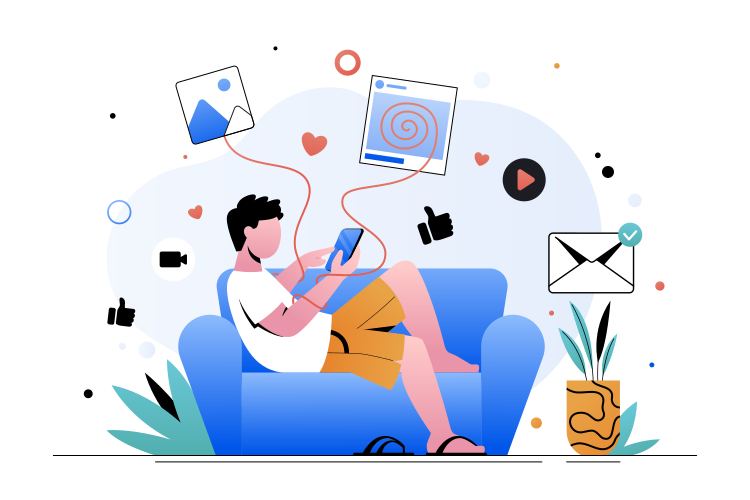
Generation Z will probably never know what a dial-up connection sounds like. As children during the mid-late 2000s and 2010s, Generation Z was the first social generation to grow up with Web 2.0 and digital technology as an established commodity. From a young age, they have watched online videos and web series and played online games. The electronics which were a luxury for earlier generations have become the baseline needs of this cohort. For them, music, movies, and communication have always been digital.
Privacy Conscious
Generation Z has a sound knowledge of the line between public and private in both online and offline worlds. They are more privacy-conscious and prefer platforms where they control who sees their content. 81% of Gen Z are concerned about data privacy on social media in 2025, and only 14% say they fully trust social platforms to handle their personal information responsibly.
That said, they do not mind brands using data to personalise experiences. 88% of Gen Z make a conscious choice to share their data with social media companies, as long as it means better, personalised recommendations. It is a calculated trade, not carelessness.


Pragmatic, Not Just Entrepreneurial
Generation Z has grown up watching economic instability, rising costs of living, and a difficult job market. This has made them realistic above all else. Gen Zs are more focused on work-life balance than climbing the corporate ladder, with only 6% saying their primary career goal is to reach a leadership position. They are not dreamers chasing status. They want financial security, skills, and work that fits their life.
Multi-Taskers
Living in a world of smartphones from the start, they know how to multitask. About 50% of Gen Z and Millennials combined say they spend more time watching social media videos and streaming services than watching legacy television. They can scroll TikTok, reply to a message, and watch a YouTube video simultaneously without missing a beat.

The 8-Second Filter, Not an 8-Second Attention Span
Gen Z lives in a world where there are limitless options but limited time. This environment has sharpened their ability to filter content fast. Research suggests this works more like an 8-second filter than an attention span. They decide within 8 seconds whether something deserves their attention and move on if it does not. Content value is measured by authenticity and relatability, with over half of Gen Z saying social content feels more relevant, and half saying they feel closer to creators than actors. The filter is not a bug in your marketing. It is the first test your content must pass.
Mental Health Aware
This is one of the most defining characteristics of Generation Z that older guides leave out entirely. Mental health challenges are widespread among Gen Z, with nearly half, 46%, having already received a formal diagnosis and more than a third, 37%, believing they have an undiagnosed condition. Anxiety leads as the most common diagnosis, followed by depression and ADHD. Nearly all Gen Z youth, 94%, report experiencing mental health challenges in an average month.
This does not make them a fragile audience. It makes them an audience that values honesty. Some 39% of Gen Zers, a higher rate than any previous generation, report working with a mental health professional in person or online. They are more open about struggle than any generation before them, and they expect brands to meet them with the same openness.


Internet Reliance
They have more faith in the online world than any other generation. They use it not just for entertainment or communication but to learn new skills and make purchasing decisions. Critically, 46% of Gen Z prefers social media over search engines for finding information. This behaviour turns TikTok and Instagram into functional search engines for younger users.
Unlike the millennials who followed online gurus, Gen Z trusts peer reviews, community discussions on Reddit, and content from people who feel like them more than polished experts.
Financially Pressured
This is a generation that wants to spend but is often forced to be selective. More than half of Gen Z are living paycheck to paycheck, and more than one-third struggle to pay their living expenses each month. 82% of Gen Z say they plan to purchase less expensive alternatives, commonly known as dupes, and 63% plan to shop for vintage or upcycled products.
Their spending power, however, is only growing. Gen Z’s spending power is expected to grow to $12 trillion by 2030, according to NielsenIQ and GfK in collaboration with World Data Lab. The financial pressure of today and the purchasing power of tomorrow make them a generation worth building for right now.


Demanding Customers
Generation Z believes brands should be fully transparent about how and where they manufacture products, what they put in them, and what values they stand for. They read labels, question claims, and are aware of greenwashing. They also leave reviews and comments to help and warn fellow buyers. PwC’s analysis shows Gen Z cut overall spending by 13% between January and April 2025, particularly in apparel, accessories, and electronics, signalling that when a brand does not offer clear value, this generation walks.
Creators, Not Just Consumers
Gen Z does not sit on one side of the screen. The creator economy is their economy. The creator economy, valued at over $127 billion in 2025, is now a professionalised industry. A staggering 92% of creators view their work as a professional pursuit, not a side hustle. Gen Z both consumes and creates content, which changes how brands need to approach them, not as an audience to broadcast to, but as a community to involve.

Friends Without Borders
They generally have no prejudice for caste, race, sex, gender, or country. The internet has made them educated about differences among people, and they have accepted both their own and others’ identities early in life. They also have more overseas friends than previous generations and are more keen on learning foreign languages. They are, by default, the most globally minded consumer group marketers have ever had to reach.
Images and Video Over Words
Digital natives prefer short video, images, and visual content over long-form text. Research shows over 90% of US Gen Z and Millennial users watch short-form content frequently or sometimes across platforms like TikTok, YouTube, and Instagram. This is why they are far more engaged on TikTok, Instagram, and YouTube than on text-heavy platforms.
Gen Z’s Digital World
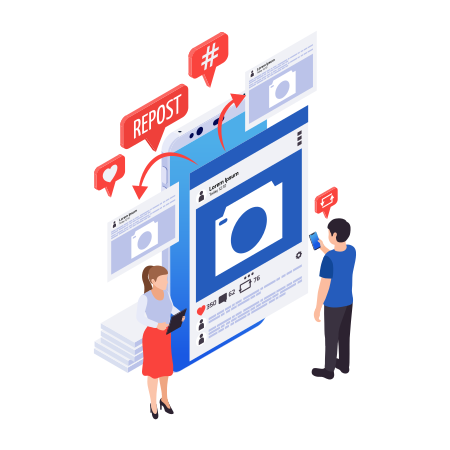
Understanding Generation Z marketing means understanding exactly where they spend their time and how they behave on each platform.
TikTok leads with 83% daily active Gen Z users in 2025, dominating video-first social engagement. YouTube is used by 92% of Gen Z monthly. Instagram holds 71% weekly engagement from Gen Z. Snapchat continues strong with 68% of Gen Z using it weekly.
94% of Gen Z report using at least one social media platform per day in 2025. Gen Z spends an average of 4.5 hours per day on social media, a 5% increase from 2024.
Social platforms are becoming the primary search engine for younger generations. Among Gen Z, 52% say they are more likely to trust brand or product information found on social media compared to information found through other forms of search like Google or AI chatbots.
76% say that social media services provide more relevant, personalised content compared to TV and video services.
This is the environment brands are operating in. It is not just a place to advertise. It is where Gen Z discovers, researches, buys, and talks about products, all without leaving the app.
Creating a Product for Generation Z
By 2030, Generation Z will account for a massive share of global consumer spending. Understanding them, building products for their needs, and drafting marketing messages that actually land is now essential for any brand that wants long-term relevance. Here are the strategies and principles that work.
Inclusivity and Co-Creation
Generation Z is a huge fan of inclusiveness. They like to be part of the product creation process and are far more willing to share feedback and improvement suggestions with brands than previous generations. Releasing an MVP or beta version of your product is especially effective when your target audience includes Gen Z. Make sure your product causes no harm to the environment, and that its ethics are easy to verify. 73% of Gen Z consumers are willing to pay more for sustainable products.
Experience Over Ownership
Developers and product teams should direct their efforts at maximising the overall customer experience. Gen Z values how something makes them feel more than what it costs or what label it carries.
Customisation and Identity
They love the idea of personalisation. Building a product that lets them make it their own is a direct line to loyalty. 80% of Gen Z consumers expect personalised experiences from brands they interact with online.
Products That Build Their Brand
They focus on building their own personal and professional identity and prefer products that help them do that.
Marketing to Generation Z
Target Them on Their Phones
Research on Generation Z shows that 95% of this generation owns or has access to a smartphone and almost all, 97%, use the internet daily.
Roughly 49% of Gen Z uses TikTok specifically for product discovery. If your brand is not optimised for social discovery, you are invisible to the people doing the searching.
Mobile-first is not a strategy choice. It is the baseline.

Never Forget the 8-Second Filter
Generation Z is born into an era of limitless information and very limited time. It is a natural tendency for them to filter out content that does not deserve their attention within the first 8 seconds.
Make sure your advertisements, content, and videos earn attention immediately. Lead with the most interesting thing you have. TikTok’s algorithm rewards content that immediately grabs attention, and brands have learned to start their videos with a strong hook in the first 3 seconds, as viewers quickly scroll if not instantly interested.
Understand Social Commerce, Not Just Social Media
Gen Z does not just discover products on social media. They buy there. More than half of Gen Z consumers make spontaneous purchases weekly or monthly because of something they saw on social media. This behaviour is reshaping e-commerce.
An incredible 77% of Gen Z use TikTok for product discovery. TikTok Shop integrates e-commerce directly into the user experience through product links, brand profiles, and live shopping features. Gen Z consumers spend an average of $100-200 per month through social commerce channels, with 73% making at least one purchase monthly via social media.
Your brand needs to be shoppable within the platform, not just visible on it. Frictionless checkout, in-app purchasing, and live shopping are now core tools in Generation Z marketing.
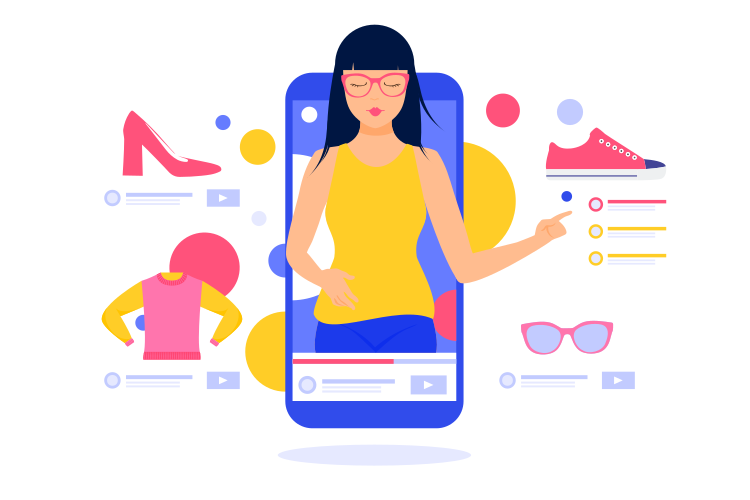
Know What Influences Their Purchase Decisions
Gen Z filters influence based on authenticity. Friends, family, and peers are the strongest signals. Over 1 in 3 Americans use TikTok primarily to keep up with trends, and Gen Z uses this not just for entertainment but for purchase research.
74% of Gen Z choose brands based on positive word of mouth and social responsibility.
The best way to attract Gen Z to try or buy your product is to capitalise on the network effect. When something becomes a genuine part of what their social circle is doing, it spreads fast and without a large paid budget.
Micro-Influencers Beat Celebrities
Gen Z’s relationship with influencer marketing is more nuanced than often described. They do not broadly distrust influencers. They distrust the wrong kind. Brands are increasingly turning to micro-influencers, creators with roughly 10,000 to 100,000 followers, who often deliver higher engagement rates than big-name celebrities. Campaigns leveraging micro-influencers on TikTok average about 8.2% engagement, outperforming the 5.3% for campaigns with macro-influencers.
Micro-influencers resonate more with Gen Z due to their niche, relatable content, and 61% prefer UGC over AI-generated posts.
The micro-creator feels like a peer, not a paid spokesperson. That difference matters enormously to this generation.
Focus on User Generated Content
Members of Generation Z are fans of authenticity above everything else. You should focus on highlighting user-generated content like comments, ratings, reviews, testimonials, and real customer videos to earn the trust of Gen Z. UGC is perceived as 2.4 times more authentic than traditional brand-produced videos.
The reason 61% of Gen Z lean more towards UGC than traditional marketing is simple: it feels authentic. With countless similar products on the market and paid partnerships everywhere, what Gen Z trusts most is unpaid, real, peer-generated content.
Let Real People Endorse Your Product
Another form of authenticity Gen Z responds to is ad campaigns that use real people rather than celebrities. Campaigns that feature honest, unpolished customer experiences over scripted brand stories work particularly well. 61% of Gen Z prefer UGC over AI-generated posts, which means the trend toward AI-generated marketing imagery and voiceovers actively works against you with this audience. Keep it human.
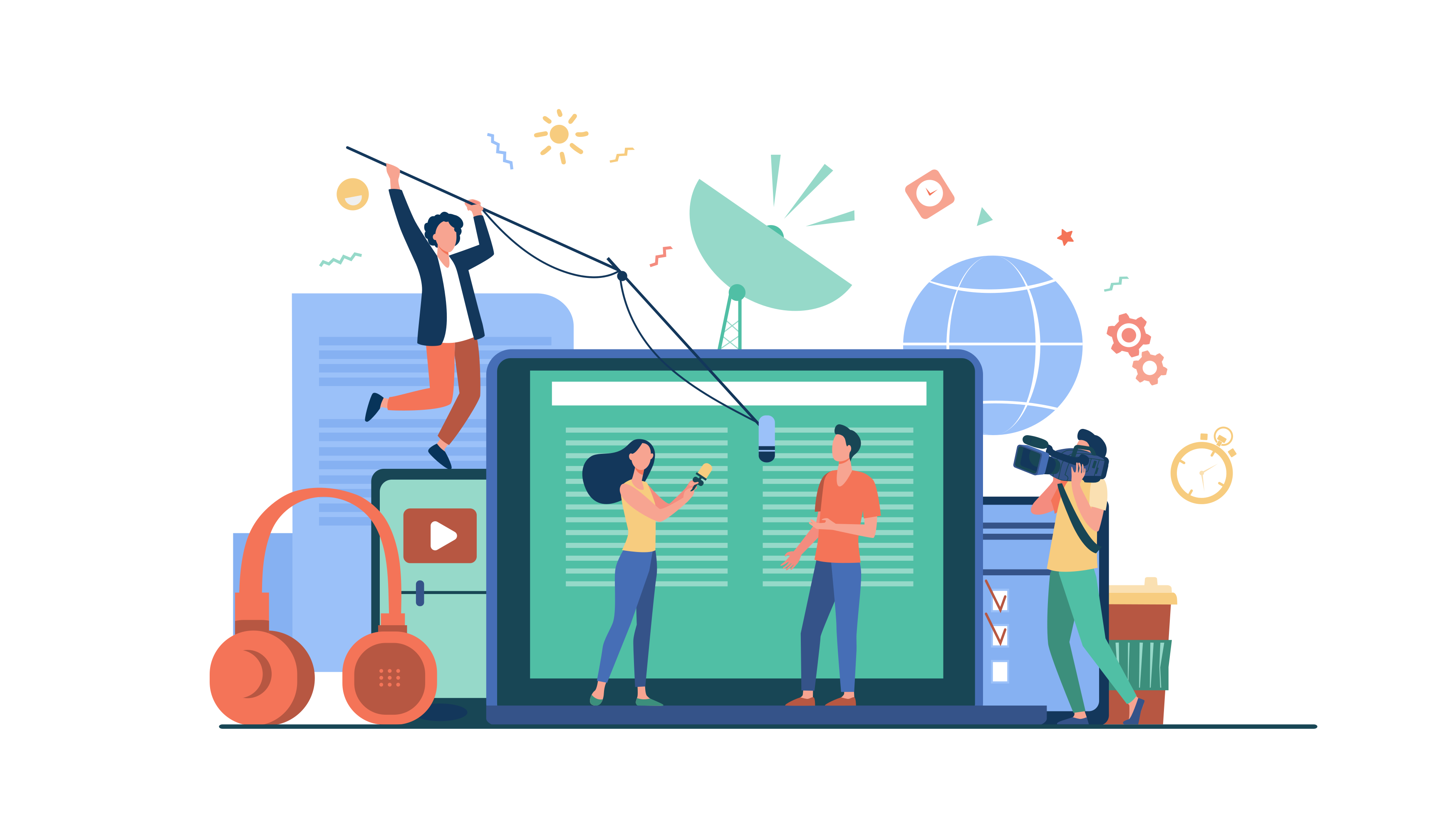
Attract Them Using Social Impact
For Generation Z, brand value is positively correlated to social impact. They use their purchasing decisions as a form of activism. They are interested in global social changes such as poverty reduction, clean water access, and racial and gender equity.
Of the 78% who say they are concerned about climate change, nearly all have taken at least one pro-climate action in the past year. They expect brands to stand on social issues and to mean it. Performative gestures will be called out. Consistent values, backed by real action, build loyalty.
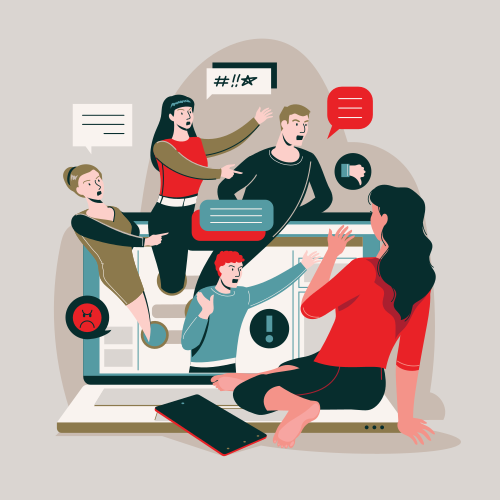
Use Meme Culture and Humour
85% of Gen Z prefer brands that use memes or cultural references appropriately in social media advertising. Gen Z communicates heavily through humour, irony, and memes. Brands that can participate in this language naturally, without forcing it, earn a place in the feed. Brands that try too hard become a meme themselves.

Gen Z in the Workforce
Generation Z marketing does not stop with consumer behaviour. Understanding who they are at work shapes how they spend and what they align with as buyers.
The second quarter of 2024 marked the first time in history that there were officially more Gen Z employees, at 18%, than Baby Boomers, at 15%, in the workforce. Gen Z employees are expected to comprise 30% of the workforce by 2030.
Gen Zs are more focused on work-life balance than climbing the corporate ladder, with only 6% saying their primary career goal is to reach a leadership position. When asked the strongest reasons for choosing to work for their current employer, learning and development is in the top three.
75% of Gen Z use AI to learn new skills, ahead of Millennials at 71%, Gen X at 56%, and Baby Boomers at 49%. They are the most AI-fluent generation in the workplace, which shapes how they expect products, services, and even brands to operate.
Marketers targeting Gen Z employees and young adult consumers should understand that this generation’s work experience, financial stress, and values overlap almost completely with their behaviour as buyers.
