
You’ve got talented people on your team, but somehow work still gets stuck. Emails pile up, deadlines slip, and you’re spending more time coordinating than actually creating. Sound familiar?
Here’s the thing: online collaboration tools can boost productivity by 30%, but only if you pick the right ones. With 71% of companies now allowing remote work at least some of the time, the way teams collaborate has completely changed.
The old tools just don’t cut it anymore. You need something that works whether your team is in the office, at home, or spread across time zones.
That’s where this guide comes in. We’ve looked at dozens of tools and picked the 12 that actually help teams work better together. These aren’t just fancy apps, they’re solutions to the real problems teams face every day.
Let’s find the right tools for your team.
Rundown
- All-In-One Workspace: Notion, “A flexible, customisable workspace that combines notes, tasks, wikis, and databases in one platform, allowing teams to create their own productivity systems.”
- Comprehensive Project Management: ClickUp, “An all-in-one productivity platform offering tasks, docs, goals, chat, and time tracking with extensive customisation options for diverse team workflows.”
- Visual Project Management: Monday.com, “A visual work operating system that transforms team collaboration through customisable boards, automations, and intuitive project tracking interfaces.”
- Team Communication Hub: Slack, “A channel-based messaging platform that centralises team communication, integrates with other tools, and organises conversations by project or topic.”
- Enterprise Collaboration Suite: Microsoft Teams, “An integrated collaboration platform within Microsoft 365 that combines chat, meetings, file sharing, and app integration for seamless teamwork.”
- Video Conferencing Standard: Zoom, “A reliable video conferencing solution for virtual meetings, webinars, and team collaboration with high-quality audio and screen sharing capabilities.”
- Task Management & Accountability: Asana, “A popular project management tool that helps teams organise, track, and manage work through task assignments, timelines, and progress visualisation.”
- Free Time Tracking: Clockify, “A straightforward time tracking tool that enables teams to monitor hours across projects with detailed reporting and productivity insights.”
- Document Collaboration: Google Docs, “A cloud-based document editor that allows real-time collaboration, automatic saving, and seamless sharing within the Google Workspace ecosystem.”
- Visual Collaboration Whiteboard: Miro, “An infinite digital whiteboard for brainstorming, planning, and visual collaboration that enables distributed teams to work creatively together.”
- Kanban-Style Project Management: Trello, “A simple, card-based project management tool using boards, lists, and cards to help teams visualise workflow and track progress intuitively.”
- Design Collaboration Platform: Figma, “A browser-based design tool that enables real-time collaboration on interface designs, prototypes, and design systems for product teams.”
Recommended Team Productivity Tools
ALL-IN-ONE WORKSPACE
Notion
Feature | Details |
|---|---|
Best For | Teams wanting one tool for everything |
Pricing | Free plan + paid tiers |
Ease of Use | Flexible but needs setup |
Platform | Web, desktop, mobile |
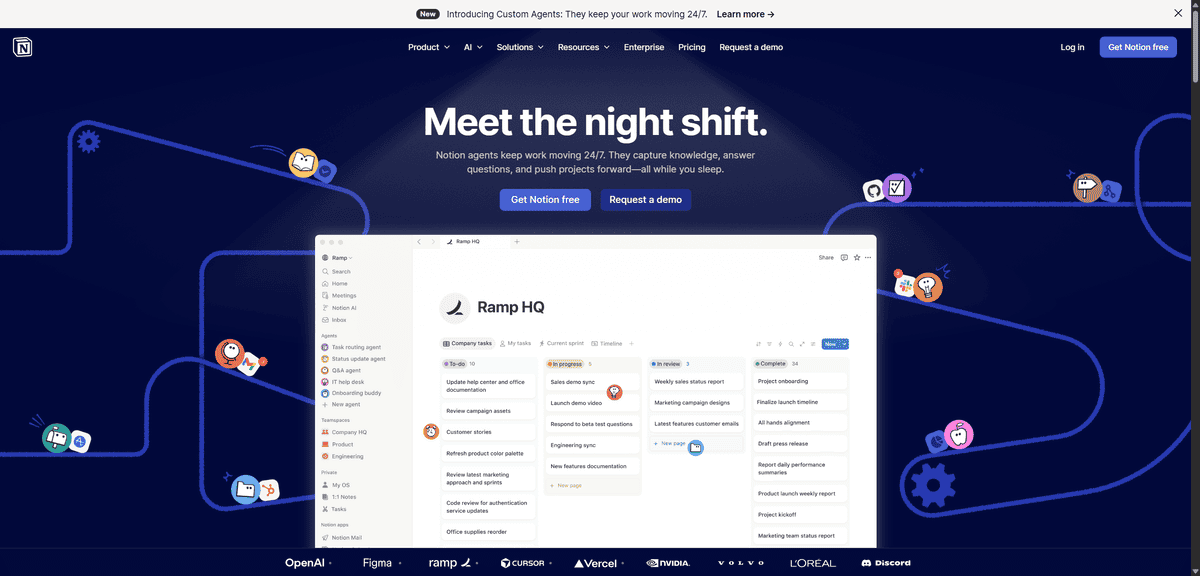
If your team keeps switching between different apps for notes, tasks, and documents, Notion could be your solution. It’s that one workspace where everything lives together instead of being scattered across multiple tools.
What makes Notion different is how it lets you build your own system. You’re not stuck with someone else’s idea of how work should be organised. You can create pages that work like documents, databases that track projects, and wikis that store team knowledge, all connected to each other.
Think about how teams actually work. You might start with meeting notes, then turn those into action items, then track progress on those tasks, and finally document what you learned. With Notion, that whole flow happens in one place instead of jumping between apps.
You can create project dashboards that show everyone what’s happening. You can build knowledge bases so new team members can get up to speed quickly. You can even set up personal workspaces that connect to team projects.
But here’s the thing: Notion has grown to over 4 million monthly active users, and that’s because teams find it genuinely useful for bringing everything together. When your notes, tasks, and documents live in the same place, you spend less time searching and more time doing actual work.
You can start with their templates if you’re not sure how to set things up. They have ready-made systems for project management, meeting notes, team wikis, and more. Once you get the hang of it, you can customise everything to match how your team actually works.
The free plan gives you plenty to work with, especially for smaller teams. You get unlimited pages and blocks, which are the building blocks of Notion. You can invite up to 10 guests to collaborate with you.
While Notion is great for teams that want everything in one place, it does have a learning curve. You need to invest some time setting up your workspace before you see the full benefits. It’s also not the best for real-time chat, you’ll still want something like Slack for quick conversations.
This tool works best for teams that are tired of app switching and want to create their own productivity system. It’s less ideal if you need specialised features that other tools do better, like advanced time tracking or complex project dependencies.
COMPREHENSIVE PROJECT MANAGEMENT
ClickUp
Feature | Details |
|---|---|
Best For | Teams wanting everything in one platform |
Pricing | Free Forever plan + paid tiers |
Ease of Use | Powerful but can feel complex |
Platform | Web, desktop, mobile |
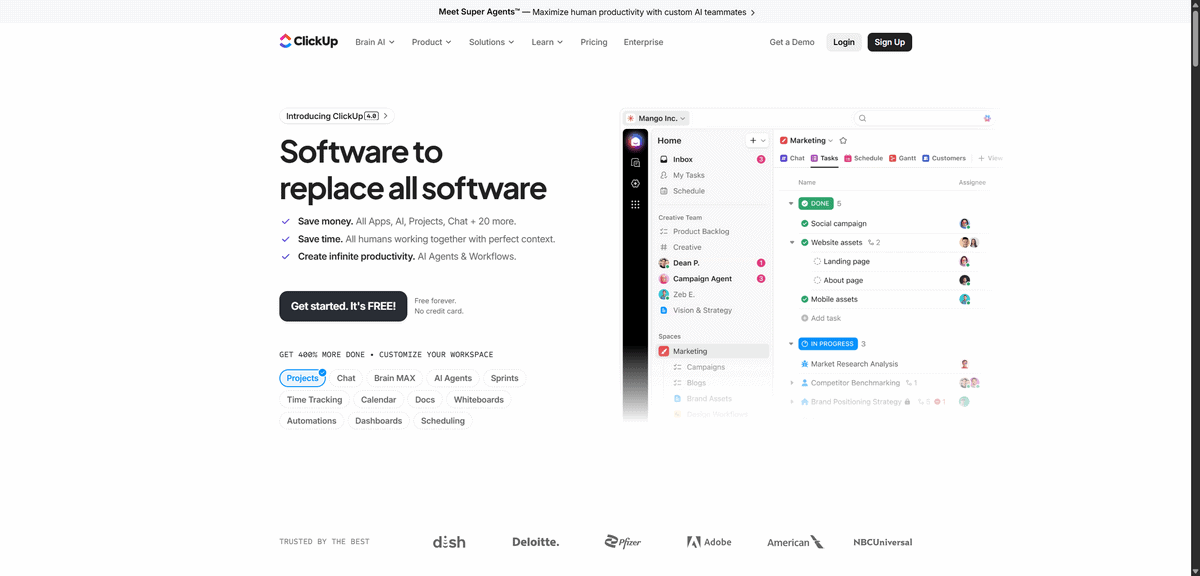
If your team uses separate tools for tasks, documents, chat, and time tracking, ClickUp brings all that together. It’s that one platform where project management meets team collaboration without switching between apps.
What makes ClickUp stand out is how it handles different types of work in the same place. You can create tasks with deadlines, write documents that link to those tasks, track time spent on projects, and even chat about work, all without leaving ClickUp. Their Free Forever plan gives you unlimited tasks and team members, which is pretty generous compared to other tools.
Think about how teams actually work on projects. You start with planning, then break things into tasks, track progress, document decisions, and communicate along the way. With ClickUp, that entire workflow happens in one system instead of jumping between five different apps.
You can set up different views for how your team likes to work. Some people prefer lists, others like boards, and some need Gantt charts for timelines. ClickUp gives you all those options in the same workspace.
The free plan includes docs, whiteboards, and chat alongside the core project management features. You get unlimited users and tasks right from the start, which makes it easy for growing teams to get everyone on board without worrying about costs.
But here’s what you should know: ClickUp packs a lot of features, and that can feel overwhelming at first. You might need some time to figure out which features your team actually needs versus what’s just available. The customisation options are extensive, which is great once you learn them but can be confusing when you’re starting out.
This tool works best for teams that want comprehensive project management without paying for multiple tools. It’s less ideal if you prefer simple, focused apps that do one thing really well. The learning curve is real, but the payoff is having everything in one place.
VISUAL PROJECT MANAGEMENT
Monday.com
Feature | Details |
|---|---|
Best For | Teams that think visually |
Pricing | Free tier + paid plans |
Ease of Use | Intuitive visual interface |
Platform | Web, desktop, mobile |
If your team gets stuck with spreadsheets and endless lists, Monday.com turns project management into something you can actually see. It’s that visual workspace where work becomes colourful boards instead of confusing spreadsheets.
What makes Monday.com different is how it uses colour, columns, and cards to show work at a glance. You’re not just reading status updates, you’re seeing which tasks are stuck, who’s overloaded, and what’s coming next. 82% of companies now use work management software to drive efficiency, and Monday.com’s visual approach helps teams actually understand what’s happening.
Think about how teams work on projects. You have tasks moving through different stages, people working on multiple things, and deadlines approaching. With Monday.com, you create boards that show all that visually. Red might mean “blocked,” green means “done,” and yellow means “in progress.” You can see bottlenecks before they become problems.
You can customise boards to match how your team works. Marketing teams might track campaigns from idea to launch. Development teams might follow features from planning to release. Each column shows a different stage, and each card represents work that needs doing.
The automations save you time on repetitive tasks. When someone completes a task, it can automatically move to the next column. When a deadline approaches, it can notify the right people. You’re not manually updating everything, the board updates itself based on rules you set.
But here’s what you should know: Monday.com works best when your team embraces the visual approach. If people prefer detailed written reports over colourful boards, they might find it too simple. The free tier gives you basic boards for up to 2 users, but you’ll need paid plans for larger teams or advanced features.
This tool works best for teams that want to see work instead of just reading about it. It’s less ideal if you need complex project dependencies or detailed resource planning. The visual approach makes collaboration intuitive, but you might still need other tools for detailed documentation.
TEAM COMMUNICATION HUB
Slack
Feature | Details |
|---|---|
Best For | Team communication and quick collaboration |
Pricing | Free plan + paid tiers |
Ease of Use | Intuitive channel-based setup |
Platform | Web, desktop, mobile |
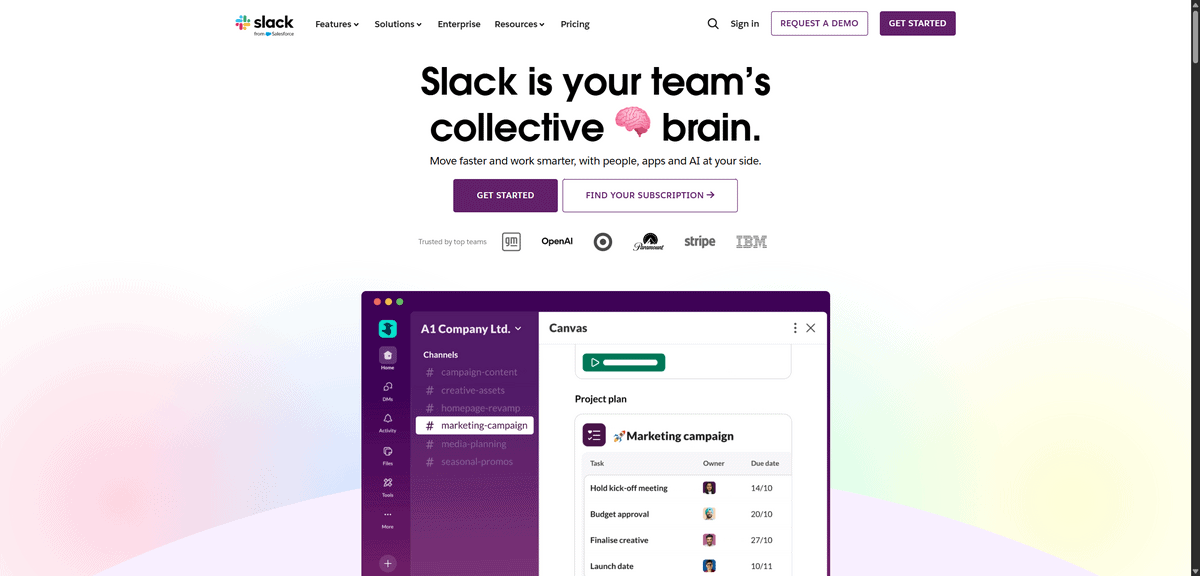
Slack brings everything into one organised space. It’s that central hub where team communication actually makes sense instead of creating chaos.
What makes Slack different is its channel-based approach. Instead of one big chat room or endless email threads, you create channels for specific topics or projects. Think #marketing-campaigns for marketing discussions, #product-launch for launch planning, and #general for company-wide announcements. Slack handles over 2 billion messages daily, showing how teams rely on it for everyday communication.
You can join channels that matter to your work and mute the ones that don’t. This keeps your focus on what’s important while still having access to everything. When you need a private conversation, direct messages work just like regular chat apps.
The search function helps you find past conversations, files, or decisions. No more digging through old emails or asking “where did we discuss this?” You can search by person, channel, or keywords to find what you need quickly.
Slack integrates with other tools you already use. You can connect it to project management apps, calendar tools, or file storage services. When something happens in another app, Slack can notify the right channel automatically.
But here’s what you should know: Slack works best when teams use channels properly. If everyone posts everything in #general, you lose the organisational benefits. The free plan limits your message history to 90 days, which might not work for teams that need to reference older conversations.
This tool works best for teams that want organised, searchable communication. It’s less ideal if you need advanced project management features or detailed document collaboration. For those, you’ll want to pair Slack with other tools that specialise in those areas.
ENTERPRISE COLLABORATION SUITE
Microsoft Teams
Feature | Details |
|---|---|
Best For | Companies using Microsoft 365 |
Pricing | Free plan + Microsoft 365 subscriptions |
Ease of Use | Familiar for Office users |
Platform | Web, desktop, mobile |
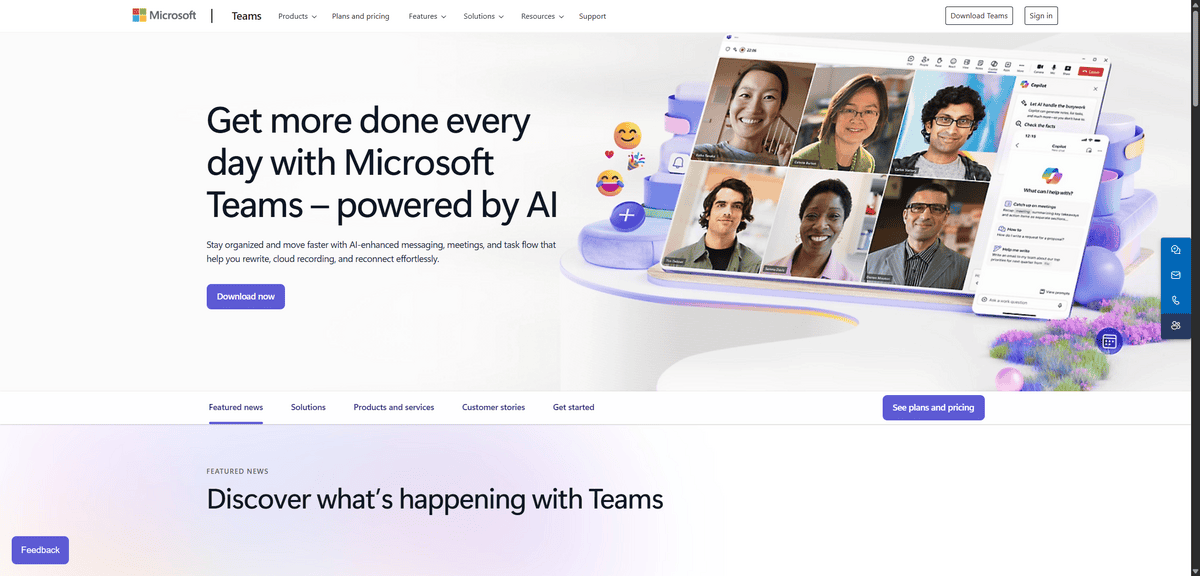
If your company already uses Microsoft Office apps, Teams brings everything together in one place. It’s that integrated workspace where chat, meetings, and documents work seamlessly instead of forcing you to switch between different tools.
What makes Teams different is how it connects to the Microsoft 365 ecosystem. You’re not just getting a chat app, you’re getting chat that works with Outlook calendars, Word documents, Excel files, and PowerPoint presentations. Microsoft Teams reached 320 million monthly active users in early 2024, showing how many organisations rely on it for daily collaboration.
Think about how work actually happens in companies. You chat about a project, schedule a meeting to discuss it, share documents during the meeting, and then edit those documents together. With Teams, that entire workflow happens without leaving the platform.
You can start a chat that turns into a video call with one click. You can share files directly from OneDrive or SharePoint. You can even work on Word documents together while chatting about changes. Everything connects back to the Microsoft tools your team already knows.
The free version gives you basic chat, video meetings, and file sharing. But the real power comes with Microsoft 365 subscriptions, where Teams becomes the hub for everything your team does.
But here’s what you should know: Teams works best when your organisation is already invested in Microsoft’s ecosystem. If you use Google Workspace or other tools, you might find the integration less useful. The interface can feel cluttered compared to simpler chat apps like Slack.
This tool works best for companies that want everything connected within Microsoft 365. It’s less ideal if you prefer lightweight, focused apps or if your team uses non-Microsoft tools for most of their work.
VIDEO CONFERENCING STANDARD
Zoom
Feature | Details |
|---|---|
Best For | Reliable video meetings and webinars |
Pricing | Free plan + paid tiers |
Ease of Use | Simple and intuitive |
Platform | Web, desktop, mobile |
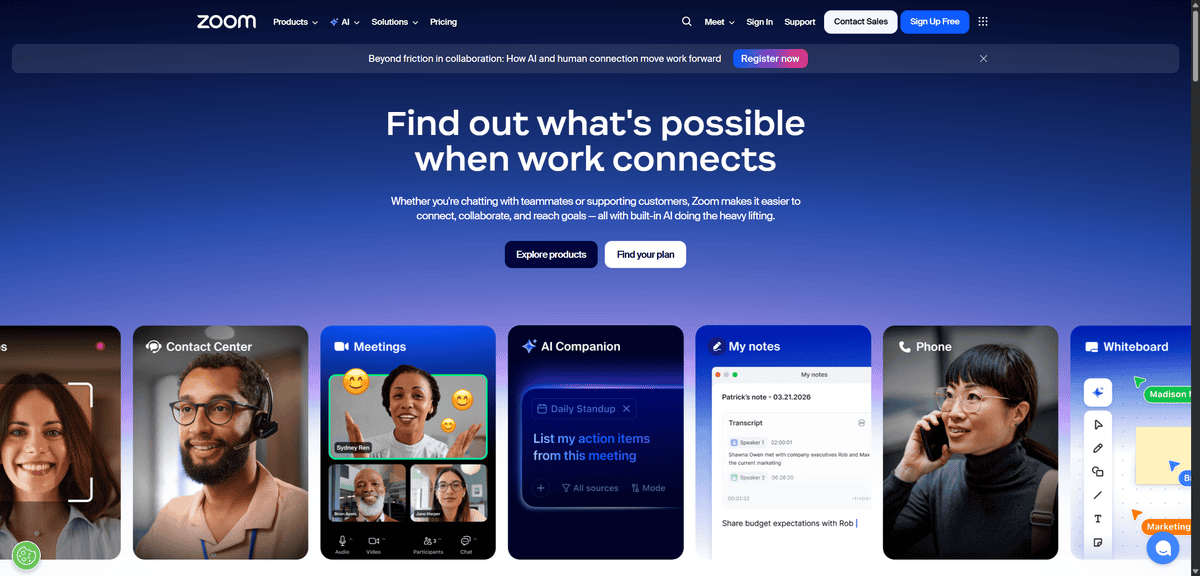
If you need video meetings that just work without technical headaches, Zoom has become the standard. It’s that reliable option where you can focus on the conversation instead of troubleshooting connection issues.
What makes Zoom different is its consistent performance across different devices and internet connections. You’re not dealing with choppy video or dropped calls when someone joins from their phone or has slower internet. Zoom holds about 55% of the video conferencing market share, which shows how many teams trust it for their meetings.
Think about how teams actually meet. You need to share your screen to show a presentation, have clear audio so everyone can hear, and maybe record the meeting for people who couldn’t attend. With Zoom, all those features work smoothly without complicated setup.
The free plan gives you 40-minute meetings for up to 100 participants, which works for most team check-ins. You get screen sharing, breakout rooms for smaller discussions, and basic recording options right from the start.
But here’s what you should know: Zoom works best when everyone uses it consistently. If some team members prefer other video tools, you lose the simplicity of having one standard. The free plan’s 40-minute limit can interrupt longer meetings, though you can always start a new session.
This tool works best for teams that want reliable video meetings without technical complications. It’s less ideal if you need advanced collaboration features like document editing during meetings. For those, you might want to pair Zoom with other tools that handle collaboration better.
TASK MANAGEMENT & ACCOUNTABILITY
Asana
Feature | Details |
|---|---|
Best For | Task management and team accountability |
Pricing | Free plan + paid tiers |
Ease of Use | Intuitive but structured |
Platform | Web, desktop, mobile |
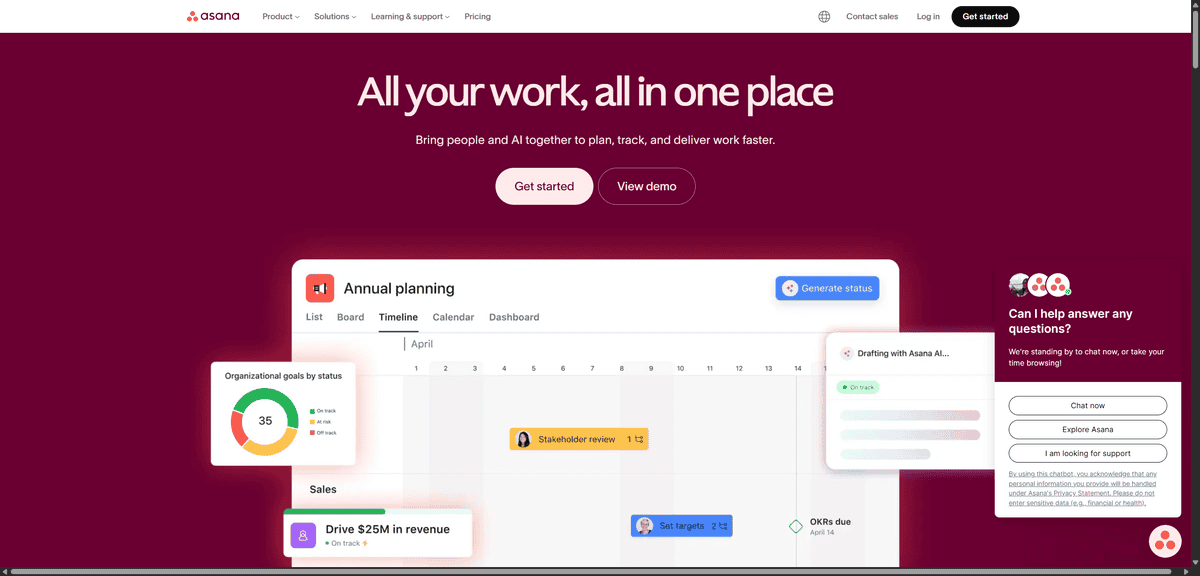
If your team struggles with knowing who’s doing what and when things are due, Asana brings clarity to task management. It’s that organised system where work gets broken down, assigned, and tracked instead of living in messy spreadsheets or forgotten email threads.
What makes Asana different is its focus on accountability through clear task ownership. You’re not just listing work, you’re assigning specific tasks to specific people with specific deadlines. Asana was named a leader in Gartner’s 2024 Magic Quadrant for Adaptive Project Management, which shows how seriously teams take its approach to work management.
Think about how projects actually move forward. Someone needs to write the report, someone else needs to design the graphics, and someone needs to review everything before the deadline. With Asana, each of those becomes a task with an owner, a due date, and clear instructions.
You can see work in different views depending on what makes sense for your team. List view shows tasks in order. Board view shows them moving through stages. Timeline view shows how everything fits together over time. Calendar view shows what’s due when.
The free plan gives you unlimited tasks and projects for up to 15 team members. You get basic task assignments, due dates, and file attachments right from the start. It’s enough for most teams to get organised without paying anything.
But here’s what you should know: Asana works best when everyone uses it consistently. If some team members keep tasks in their heads or personal notes, you lose the visibility that makes it valuable. The free plan has limits on advanced features like timelines and custom fields.
This tool works best for teams that want clear task ownership and progress tracking. It’s less ideal if you need complex resource planning or detailed time tracking. For those, you might want to pair Asana with other tools that handle those specific needs.
FREE TIME TRACKING
Clockify
Feature | Details |
|---|---|
Best For | Free time tracking across projects |
Pricing | Completely free core features |
Ease of Use | Simple and straightforward |
Platform | Web, desktop, mobile |
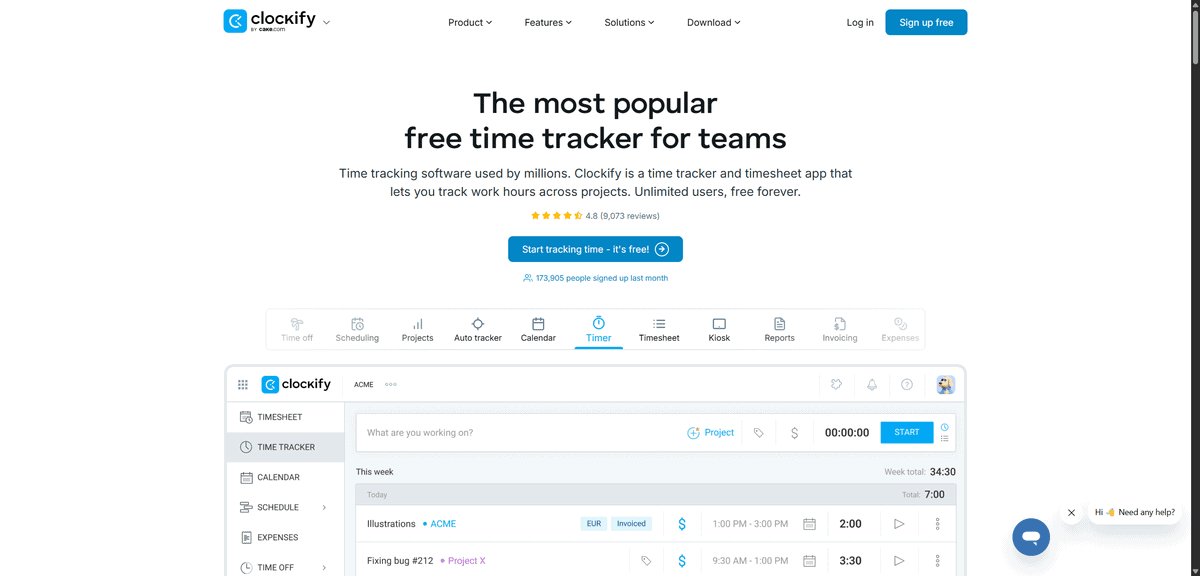
If your team needs to track time but doesn’t want to pay for another subscription, Clockify gives you robust time tracking for free. It’s that straightforward tool where you can see exactly where hours are going without complicated setups or hidden costs.
What makes Clockify different is how it handles time tracking as a simple, essential function. You’re not getting buried in features you don’t need, just start a timer when you begin work, stop it when you’re done, and assign that time to a project or client. US companies have already tracked 26.7 million hours of work in 2025 using time tracking tools, showing how important this data has become for understanding productivity.
Think about how teams actually work on multiple projects. You might spend two hours on client A’s website, one hour on internal training, and three hours on team meetings. With Clockify, you track each segment separately, then see reports showing where your time actually goes.
You can create projects for different clients or initiatives, then track time against each one. Team members can use timers or manually enter hours. Managers can see reports showing who’s working on what and how much time projects are taking.
The free plan gives you unlimited users, projects, and time tracking. You get basic reporting, timesheet approvals, and integrations with other tools. For most teams, that’s everything you need to understand how time is being spent.
But here’s what you should know: Clockify works best when everyone uses it consistently. If some team members forget to track time or enter inaccurate data, your reports won’t reflect reality. The free plan has limits on advanced features like scheduling or detailed budgeting.
This tool works best for teams that want simple, free time tracking without complex project management features. It’s less ideal if you need integrated task management or advanced resource planning. For those, you might want to pair Clockify with other tools that handle those specific needs.
DOCUMENT COLLABORATION
Google Docs
Feature | Details |
|---|---|
Best For | Real-time document collaboration |
Pricing | Free with Google account |
Ease of Use | Simple and familiar |
Platform | Web, mobile, desktop |
If your team still emails documents back and forth with confusing version names, Google Docs changes how you work together on documents. It’s that cloud-based editor where everyone can work on the same document at the same time instead of waiting for their turn.
What makes Google Docs different is its real-time collaboration. You’re not just sharing files, you’re seeing teammates type, edit, and comment live as they work. Real-time editing helps reduce confusion around version control because everyone works on the same version instead of creating multiple copies.
Think about how teams actually write documents together. Someone starts a draft, another person adds research, someone else edits for clarity, and a manager reviews everything. With Google Docs, that entire process happens in one document where you can see who’s making which changes.
You can see coloured cursors showing where each person is working. You can add comments that teammates can reply to. You can even suggest edits that others can accept or reject. Everything saves automatically, so you never lose work or wonder which version is current.
The free version gives you everything most teams need. You get unlimited documents, real-time collaboration, and basic formatting tools. You can share documents with anyone using just a link, and control whether they can view, comment, or edit.
But here’s what you should know: Google Docs works best when your team embraces cloud collaboration. If people prefer working offline or in desktop apps, they might find the web-based approach limiting. The formatting options are simpler than advanced word processors like Microsoft Word.
This tool works best for teams that want simple, real-time document collaboration. It’s less ideal if you need complex document formatting or advanced layout features. For those, you might want to pair Google Docs with other tools that handle specific document needs.
VISUAL COLLABORATION WHITEBOARD
Miro
Feature | Details |
|---|---|
Best For | Visual brainstorming and remote collaboration |
Pricing | Free plan + paid tiers |
Ease of Use | Intuitive visual interface |
Platform | Web, desktop, mobile |
If your team needs to brainstorm ideas visually but can’t gather around a physical whiteboard, Miro creates that shared visual space online. It’s that infinite digital canvas where distributed teams can think together visually instead of just talking through ideas.
What makes Miro different is how it handles visual collaboration as a natural way to work. You’re not just drawing shapes, you’re creating mind maps, planning projects, designing workflows, and brainstorming ideas on a canvas that everyone can see and contribute to in real time. Miro has over 90 million users worldwide, showing how many teams rely on visual collaboration for their daily work.
Think about how teams actually brainstorm. Someone sketches an idea, another person adds to it, someone else organises the thoughts, and everyone builds on each other’s contributions. With Miro, that entire process happens visually on a shared canvas where you can see everyone’s thinking unfold.
You can start with a blank canvas or use one of their templates. There are templates for mind mapping, project planning, design thinking workshops, retrospectives, and more. Each template gives you a starting point that you can customise to fit your team’s specific needs.
The free plan gives you three editable boards, which works for smaller teams or occasional brainstorming sessions. You get basic shapes, sticky notes, drawing tools, and real-time collaboration right from the start. Team members can join without creating accounts, which makes it easy to include clients or external partners.
But here’s what you should know: Miro works best when your team embraces visual thinking. If people prefer written documents or verbal discussions, they might find the visual approach less natural. The free plan has limits on board numbers and advanced features like voting or timers.
This tool works best for teams that want to collaborate visually across distances. It’s less ideal if you need detailed text editing or complex data analysis. For those, you might want to pair Miro with other tools that handle those specific needs.
KANBAN-STYLE PROJECT MANAGEMENT
Trello
Feature | Details |
|---|---|
Best For | Simple visual project management |
Pricing | Free plan + paid tiers |
Ease of Use | Very intuitive and straightforward |
Platform | Web, desktop, mobile |
If your team gets overwhelmed by complex project management tools, Trello keeps things simple with its visual Kanban approach. It’s that straightforward system where work moves through columns on a board instead of getting lost in complicated interfaces.
What makes Trello different is how it uses boards, lists, and cards to show work visually. You’re not dealing with complex settings or confusing menus, just drag cards from “To Do” to “Doing” to “Done.” Trello’s user base is remarkably balanced across business sizes, with small and medium businesses making up 39.4% of users, showing how its simplicity appeals to teams of all types.
Think about how work actually flows through a team. Someone creates a task, someone works on it, then it gets completed. With Trello, that entire process becomes visual cards moving through columns. You can see what’s stuck, what’s progressing, and what’s finished at a glance.
The free plan gives you unlimited personal boards, cards, and lists. You get basic checklists, due dates, and file attachments right from the start. For many teams, that’s everything they need to organise work without paying anything.
But here’s what you should know: Trello works best for teams that want simple visual management. If you need complex project dependencies or detailed resource planning, you might find it too basic. The free plan has limits on advanced features like automation or custom fields.
This tool works best for teams that want to see work move visually without complexity. It’s less ideal if you need integrated time tracking or advanced reporting. For those, you might want to pair Trello with other tools that handle those specific needs.
DESIGN COLLABORATION PLATFORM
Figma
Feature | Details |
|---|---|
Best For | Design collaboration for product teams |
Pricing | Free plan + paid tiers |
Ease of Use | Intuitive for designers, collaborative |
Platform | Web-based, desktop app |
If your product team needs to design interfaces together in real time, Figma changes how design collaboration works. It’s that browser-based tool where designers, developers, and product managers can work on the same designs simultaneously instead of passing files back and forth.
What makes Figma different is its real-time collaboration approach. You’re not just sharing design files, you’re seeing teammates edit components, create prototypes, and give feedback live as they work. 95% of Fortune 500 companies use Figma in their design workflows, showing how seriously teams take its collaborative approach to interface design.
Think about how product teams actually design interfaces. Someone creates wireframes, another person adds visual design, someone else builds interactive prototypes, and developers need to inspect the details. With Figma, that entire process happens in one shared workspace where everyone can see and contribute.
You can create design systems that keep your team consistent. When someone updates a button style or colour palette, those changes automatically apply across all designs. This means your team doesn’t waste time fixing inconsistencies or using outdated components.
The free plan gives you three projects with unlimited files, which works for smaller teams or individual designers. You get real-time collaboration, basic prototyping, and design tools right from the start. Team members can join without downloading anything since it works in any modern browser.
But here’s what you should know: Figma works best when your team embraces browser-based collaboration. If designers prefer desktop-only tools like Sketch or Adobe XD, they might find the web-based approach different. The free plan has limits on advanced features like team libraries or version history.
This tool works best for product teams that want to design together in real time. It’s less ideal if you need advanced 3D modelling or complex illustration work. For those, you might want to pair Figma with other tools that handle those specific needs.
